Dossier
Parental alienation: understand it, spot it, act on it
Parental alienation is the subject running through much of Sia Trog’s fiction. This page brings together, factually and with sources, what is known about this phenomenon: its definition, its uncertain status before French courts, the signs that can raise concern, and the remedies that actually exist.
This content is informative. It does not replace the personalized advice of a family law attorney or a psychologist — every family situation is different.
Free resource
The signs that should raise concern — printable checklist
Receive an instant PDF summary sheet: behavioral, verbal and emotional signs, and what to do if you recognize them.
Download the free checklistWhat is parental alienation?
The expression describes a situation in which a child, following a conflictual separation, comes to reject one of their parents without a proportionate reason — this rejection being encouraged, consciously or not, by the other parent (systematic denigration, obstruction of visits, psychological pressure).
In psychology, the more precise term is loyalty conflict: a child finds themselves in a situation where they feel forced to “betray” one parent to remain loyal to the other. This intrapsychic conflict can harm the child’s self-esteem and encourage withdrawal, anxiety or behavioral problems.
A legally and scientifically debated concept
This is the most important point to understand, and the one most often left out: the “parental alienation syndrome” (PAS), theorized in the 1970s by American child psychiatrist Richard Gardner, has no medical consensus and is not included in the World Health Organization’s international classification of diseases.
A March 2018 circular from the French Ministry of Justice, confirmed by a ministerial response dated December 12, 2024, warns French magistrates about the “particularly controversial” nature of this concept and invites them to prefer notions such as loyalty conflict, parental conflict, or coercive control (emprise). Several French courts of appeal (Caen, Lyon, Versailles, Bordeaux) have moreover dismissed PAS as “devoid of scientific value.”
This caution is not incidental: the European Parliament, in its resolution of October 6, 2021 on domestic violence and custody rights, urged member states not to recognize PAS in their law or judicial practice — the WHO and the American Psychological Association rejecting this concept in part because it has been used to discredit parents, most often mothers, who limited contact with the other parent in order to protect a child from real violence.
The reality commonly grouped under the term of parental alienation does exist, then, but it requires a cautious, individualized diagnosis, established by professionals — never an automatic or one-sided assessment.
Signs that can raise concern
No single sign, taken in isolation, is conclusive: it is their accumulation, over time, that should raise concern — and only a professional can make a diagnosis. Among the signs most often described:
- Rejection without ambivalence: the child divides the world into one parent who is “all good” and one who is “all bad,” with no nuance.
- Speech that seems borrowed from an adult, with words or accusations that do not match the child’s age or experience.
- An absence of guilt in the face of this rejection, and vague, trivial or illogical justifications.
- An extension of the rejection to the targeted parent’s entire circle (grandparents, new partner, friends).
- A sudden change in attitude toward a parent who was previously close, with no identifiable triggering event.
What to do? Legal remedies available in France
Several steps exist, ideally with the help of a family law attorney:
- Apply to the Juge aux Affaires Familiales (JAF), France’s family court judge, to request a review of custody or residence arrangements.
- Request a family medico-psychological expert assessment, ordered by the judge, to establish an objective picture of the situation.
- Turn to family mediation, a structured process that can sometimes defuse the conflict before it becomes entrenched.
- If the child is in danger, apply to the juge des enfants (children’s court judge).
- In the event of a repeated and unjustified refusal to hand over the child, file a criminal complaint for “non-représentation d’enfant” (failure to produce a child, Article 227-5 of the French Criminal Code — punishable by up to one year’s imprisonment and a €15,000 fine, even though the prison sentence is rarely applied in practice). According to Le Club des Juristes, around 750 convictions per year were handed down for this offense between 2014 and 2023, in nearly 80% of cases against mothers.
- Keep records (written exchanges, statements from relatives or professionals): in this type of case, the burden of proof largely rests on factual elements gathered over time.
How to prevent it
- Never denigrate the other parent in front of the child, even amid an intense conflict.
- Do not make the child a messenger or confidant in the parental conflict.
- Actively support the child’s bond with both parents, except where there is a proven danger.
- Favor family mediation from the first signs of tension around custody.
- Consult a child psychiatrist or psychologist early if the child’s behavior changes in a worrying way.
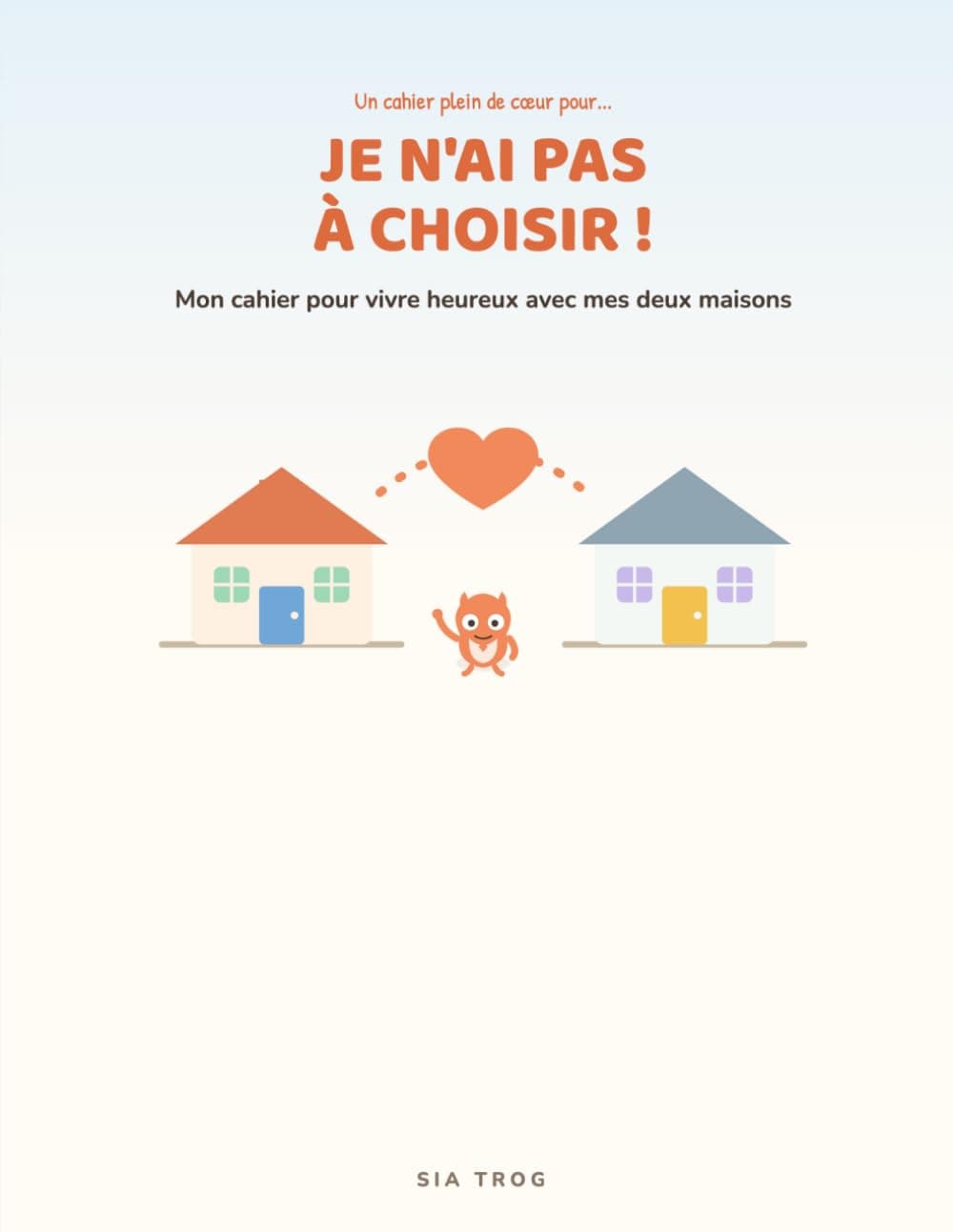
For children
Je n'ai pas à choisir !
Mon cahier pour vivre heureux avec mes deux maisons — a French-language activity book.
He can love his dad AND his mom. He does not have to choose. An activity book designed to answer these questions with simple words, gentleness and a lot of play, never with the tone of a psychology manual. With the help of Câlin, its mascot, the child learns that they are allowed to love both parents, discovers phrases so they never feel obliged to pick a side, and works through their emotions with an emotions wheel, an inner-weather tracker and practical checklists. A short closing section also speaks directly to the parent giving this book.
79 pages — ages 5 à 8 ans — by Sia Trog. Available in French only.
Discover the activity book on Amazon.fr (French edition)Go further
A closer look at every question
- Signs of Parental Alienation in Children: A Complete Guide
The behavioral, verbal and emotional signs often described in a child exposed to a situation of parental alienation — and what they do not automatically mean.
- PAS, Loyalty Conflict, Coercive Control: Not to Be Confused
Three concepts often mixed up in discussions of parental alienation, and why the distinction matters before French courts.
- Dealing with the Family Court Judge (JAF) in France
In France, these cases are handled by the Juge aux Affaires Familiales (JAF). This guide covers the judge's role, the factual evidence worth gathering, and how a family medico-psychological expert assessment unfolds in cases of suspected parental alienation.
- When a Child Stops Responding: Understanding Ambiguous Loss
Why a child's silence hurts differently than accusations or open conflict, what psychology calls "ambiguous loss," and where to turn.
- Parental alienation glossary
PAS, loyalty conflict, JAF, alternating residence, ambiguous loss... every term explained simply.
- Do you recognize these signs?
A simple, free questionnaire to help you see things more clearly, without replacing a professional’s opinion.
- Testimonies
Parents and children share their experience, anonymously — and you can share yours.
- News
Legal and parliamentary developments on the topic, sourced and updated as things happen.
Associations and professionals
ACALPA (Association contre l’aliénation parentale), a French association founded in 2005, offers listening, support sessions, guidance and documentary resources to concerned parents.
acalpa.info (French) →For an individual situation, a family law attorney and a psychologist or child psychiatrist for the child remain the most appropriate contacts.
Videos
The subject explained on TikTok
Sia Trog regularly discusses parental alienation on TikTok — warning signs, lived experience, advice before a hearing. (Videos are in French.)
Frequently asked questions
- Is parental alienation recognized by French courts?
- The term "parental alienation syndrome" (PAS) is not recognized as a scientific diagnosis: it has no medical consensus and does not appear in the World Health Organization's classification of diseases. Several French courts of appeal (Caen, Lyon, Versailles, Bordeaux) have dismissed it as "devoid of scientific value." That said, the reality of a child being manipulated against one of their parents is taken into account by French judges under other concepts, such as "loyalty conflict" or parental "coercive control" (emprise).
- Why is the concept of PAS controversial?
- Because it has also been used, in some cases, to discredit a parent — most often a mother — who limited contact with the other parent in order to protect the child from real violence. The European Parliament, in its resolution of October 6, 2021, urged member states not to recognize PAS in their law or judicial practice, precisely for this reason.
- What can be done if the other parent prevents the exercise of custody or visitation?
- In France, the legal route is to apply to the Juge aux Affaires Familiales (JAF), the family court judge, who can reassess custody arrangements and order a family medico-psychological expert assessment. In the event of a repeated and unjustified refusal to hand over the child, a criminal complaint for "non-représentation d'enfant" (failure to produce a child) can be filed under Article 227-5 of the French Criminal Code. These steps are best carried out with the help of a family law attorney.
- Who can help or support me?
- A family law attorney, a psychologist or child psychiatrist for the child, and associations such as ACALPA (Association contre l'aliénation parentale), a French organization that offers listening, guidance and documentary resources to concerned parents.
Sources
- Council of Europe — Resolution 2079 (2015), “Equality and shared parental responsibility: the role of fathers” (French)
- European Parliament — Resolution of 6 October 2021 on the impact of intimate partner violence and custody rights (French)
- French National Assembly — Written question no. 3504 and the Ministry of Justice’s response (December 12, 2024) (French)
- French Senate — Written question from Senator Evelyne Corbière Naminzo on PAS (2024) (French)
- Légifrance — Article 227-5 of the French Criminal Code (French)
- Le Club des Juristes — “Faut-il dépénaliser le délit de non-représentation d’enfant ?” (French)
- Village Justice — Barbara Régent, attorney, “Syndrome d’aliénation parentale : réponse ministérielle du 12 décembre 2024” (French)
Sia Trog explores this subject through several of her novels, notably Alienation and Alienation: Legacy.